A mockup helps you make a design decision. A physical clothing sample helps you decide whether that design is ready for someone to wear. Fit, texture, the way a logo sits near a pocket, and the feel of a printed area become easier to evaluate when the garment is in your hands.
For a print-on-demand clothing business, a useful sample review should produce a clear next action: approve this version, revise a specific detail, or ask a production question. Ordering several pieces without a plan can leave you with impressions and little evidence to guide the next request.
Use this POD sample quality checklist to build a repeatable review for tees, sweatpants, cropped hoodies or matching sets. It is a practical review method, not a laboratory certification or a guarantee of production results.
Decide What The Sample Needs To Prove
Write a short sample brief before preparing the order. Name the product, color, size, artwork version and placement you want to evaluate. Add one or two questions that would change your decision to offer the piece.
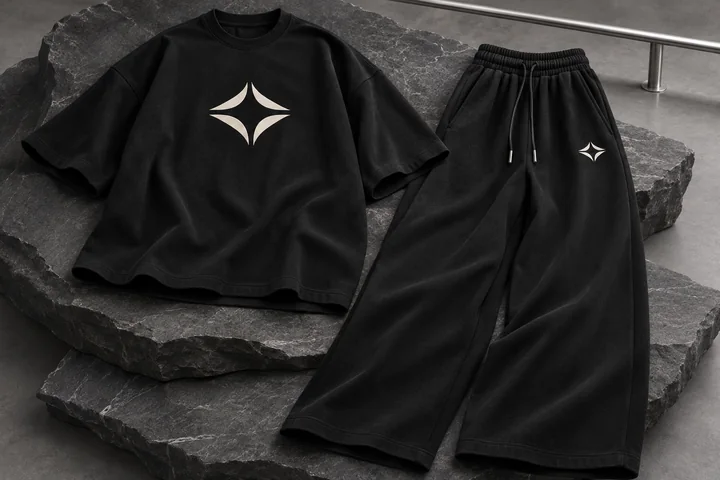
For a tee, the question might be whether the back graphic feels balanced with a smaller front mark. For sweatpants, it could be whether the upper-thigh logo is readable without dominating the leg. For a co-ord set, review how the two garments fit together as well as how each works separately.
Keep the test focused. If you change the artwork, size, color and placement at once, it becomes harder to identify which change improved the result.
Record The Exact Version Before Ordering
Give the sample a simple reference in your own notes, such as Set A / Black / M / Artwork V2. Save the original file and record which side or logo area uses it. Your request details should agree with that record.
In MB POD Studio, choose the product, complete its color-and-size selections, and inspect every supported artwork area. The queue is useful for comparing variants, but only add versions that answer a real question in your sample brief.
Remember that the site currently accepts unpaid order requests. Submitting records your choices and artwork without collecting online payment. Confirm payment, sample availability and production arrangements with Minimal Basics before treating the request as a scheduled order.
Inspect The Garment Before Judging The Graphic
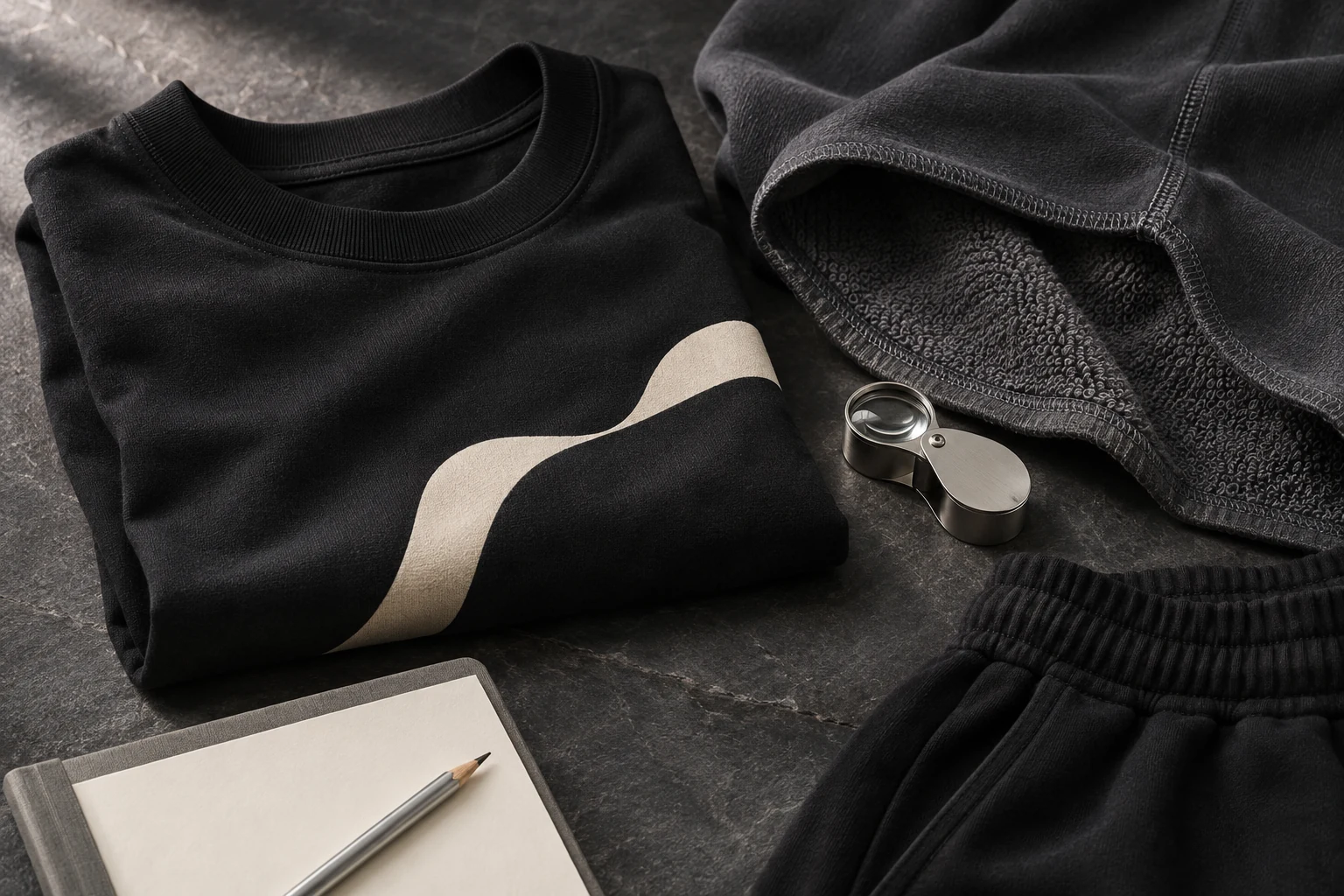
When the sample arrives, look at the blank garment first. Assess its overall shape, visible stitching, collar or waistband, hems and any pockets. Note specific observations instead of broad labels such as good or bad quality.
Wear the piece and move normally. Sit, walk and lift your arms when reviewing a tee or hoodie. For pants, check how the waist, hip and length feel together. A matching set needs enough comfort in both pieces; liking the shirt does not settle the pants decision.
Use the product's size chart and the same measuring convention when comparing dimensions. Record the condition of the garment and how it was laid out. Ask Minimal Basics about measurement methods and production tolerances before deciding whether a difference is acceptable; this checklist does not establish a universal tolerance.
Review Artwork At Normal Viewing Distance
Look at the complete garment from the distance at which someone would normally see it. Then inspect the printed area more closely. This separates a composition problem from a file-detail problem.
Review spelling, orientation, alignment, contrast and the relationship between graphic size and garment shape. Check small lettering and narrow gaps against the original file. A design can be visually clear on a large screen yet feel too busy when reduced on a garment.
For a two-sided tee, compare front and back together. For a pants logo, check its relationship with the pocket and seams. Record whether the result matches the placement you intended, and confirm exact physical dimensions if your project depends on them.
Check Care Results Without Turning Them Into A Guarantee
Photograph the sample before its first wash. Follow the care label and any print-specific instructions supplied with the garment; do not choose a wash or drying process based only on a general internet recommendation.
After the garment has been cared for and dried as instructed, compare it with your baseline. Note visible changes in shape, print appearance, color and overall feel. Use similar light and positioning for the photographs so your comparison is useful.
A small home test gives you observations about that sample under those conditions. It does not prove a lifetime claim, a fixed number of washes or identical results across every garment. If you see an unexpected change, document it and ask for guidance before selling the piece or making durability promises.
Use A Simple Sample Review Sheet
This review sheet keeps the decision tied to evidence. Fill it in for each version, then keep the notes with your artwork and request reference.
| Review Area | What To Record | Useful Next Action |
|---|---|---|
| Product Identity | Garment, color, size, quantity and artwork version | Correct any mismatch before comparing results |
| Fit And Measurements | Wearing notes and consistently measured dimensions | Clarify sizing or request another test size |
| Construction | Specific observations about seams, hems and pockets | Ask about a visible issue with clear photos |
| Artwork | Readability, orientation, contrast and position | Revise one file or placement at a time |
| Care Review | Instructions followed and before/after observations | Investigate unexpected changes before approval |
| Delivery Details | Item accuracy, packaging and recipient instructions | Resolve any difference before customer delivery |
Use three statuses in your own notes: approved, revision needed, or question pending. A score alone can hide an important issue; write the reason for the decision as well.
Review The Delivery Experience As Part Of The Product
The sample also gives you a chance to check that the delivered items match the requested color, size, quantity and artwork. Keep the packaging and order reference until you have completed the review.
If you intend to use direct-to-customer delivery, test the instructions you plan to use. Check whether the packaging follows the agreed branding and price-display preference. Do not assume a preview image proves what will arrive in the parcel.
MB POD's customer-delivery option records the recipient address, the request for no Minimal Basics labels, tags or branding, and an optional price-on-package instruction. Review these details alongside the product; address accuracy is part of a reliable request.
Approve A Version And Keep It As Your Reference
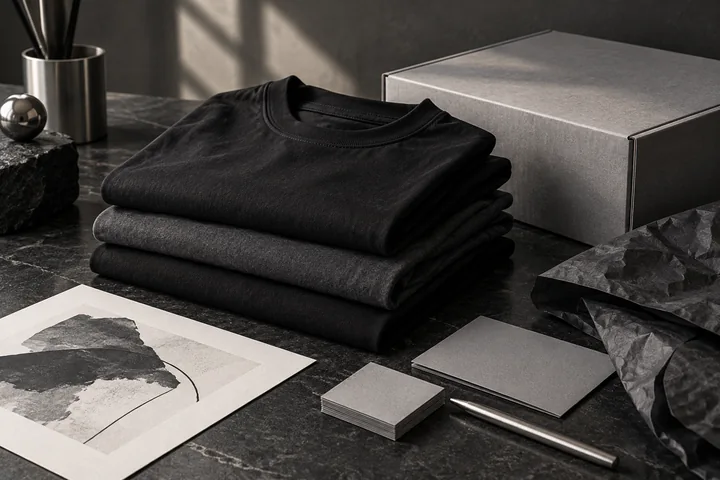
Once the sample answers your questions, save the approved artwork and a concise record of the placement and garment choices. Take your own photographs if you plan to show the finished result to customers. The editorial image at the top of this guide is an illustration of sample review, rather than proof of a particular finished product.
If a revision is needed, change the specific issue and document the new version. Keep the earlier sample for comparison instead of relying on memory. Revisit the review when you introduce a different garment, color treatment or design that changes the result.
For a full matching outfit, begin with the Co-ord Set studio. For a compact logo test, use the Sweatpants studio.
POD Sample Questions
Do I Need To Test Every Color Immediately?
Start with the versions that answer your most important questions. A light and dark color can reveal different contrast decisions. Expand testing as you add combinations you intend to offer; do not imply that one sample validates every variation.
Can A Mockup Replace A Physical Sample?
A mockup supports visual planning. It cannot let you feel the fabric, wear the garment or observe care results. Use each for the decision it can actually help you make.
Is There A Special MB Sample Discount?
This guide does not promise a sample discount or separate sample program. Review the current product price and confirm sample arrangements directly with Minimal Basics.
When Is A Sample Ready To Approve?
Approve it when the recorded version meets your fit and design goals and any production questions are resolved. Keep the reference and avoid making claims that your review did not test.