Organic marketing for a print on demand clothing business works best when it connects a specific audience with a product they can understand. Useful search content, clear product pages and consistent visual material can support that connection. Posting more often is only helpful when the content answers a real question or shows something worth seeing.
This guide provides a practical plan for an independent clothing brand using its own selling channel. It focuses on what you can create, distribute and measure without buying ads. The schedule organizes the work; it does not promise that a new website will rank or generate sales within a fixed number of days.
Give Each Page A Clear Job
A product page should help someone evaluate the garment. A collection page should help them compare related products. A blog article can answer an earlier question, such as how a design idea might become a small clothing collection.
Choose a primary question for each article before writing it. For a photography-inspired collection, an original story about translating your own film images into wearable graphics serves a different purpose from the product page selling the tee. Give readers a relevant next step between the two.
If two proposed articles would satisfy the same question with nearly the same information, improve the existing page instead of creating another version. Keep a simple topic list so your publishing plan develops the brand's knowledge rather than repeating introductions with slightly different titles.
Start With Questions You Can Answer From Your Own Product
Collect questions from actual conversations, product inquiries and feedback on your designs. Group them by the decision the reader is trying to make: choosing a concept, judging the garment, comparing an option or preparing to order.
Create a short brief for each useful question. Note the audience, the answer, the original material you can provide and the most relevant product or guide to link. A page becomes more useful when it includes your own process photographs, a specific example or a clear decision worksheet.
For a clothing brand, useful material might include the story behind an original drawing, how you selected the final garment color, or what you changed after reviewing a sample. Describe observations you can substantiate. Avoid inventing customer results, test findings or production claims to make an article sound authoritative.
Make Product Pages Ready For The Visitor
Before directing people to a product, check that they can find the details needed for a decision: the garment description, available options, size information, the current price and the relevant delivery and order conditions.
Use a descriptive product name and write the explanation in your brand's own words. A visitor should be able to understand the design and the clothing without reading a string of repeated keywords. Show where the artwork appears and identify the important differences between variants.
Give each supporting article a descriptive title, a readable introduction and headings that match its actual contents. Google's SEO Starter Guide provides a useful foundation for helping people and search engines understand a page.
Build A Small Library Of Original Visual Material
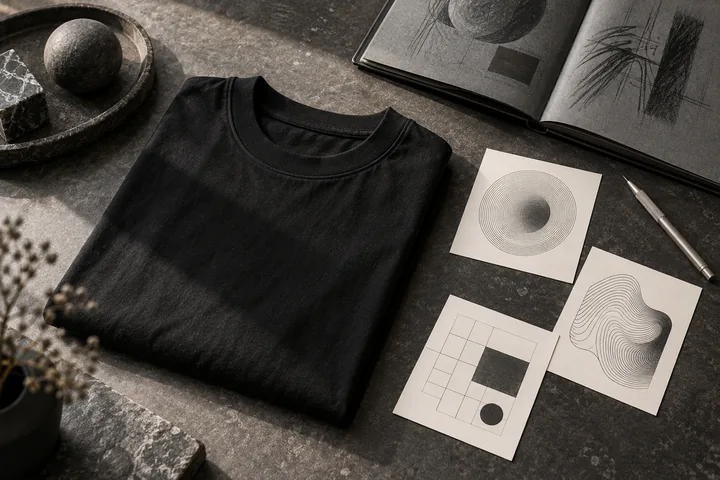
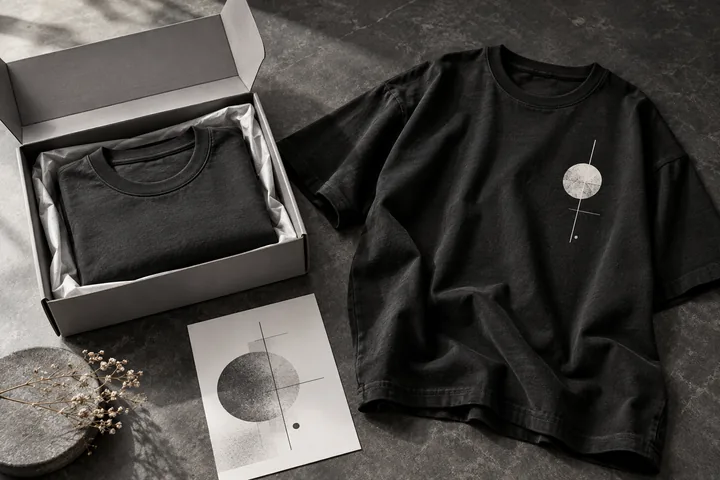
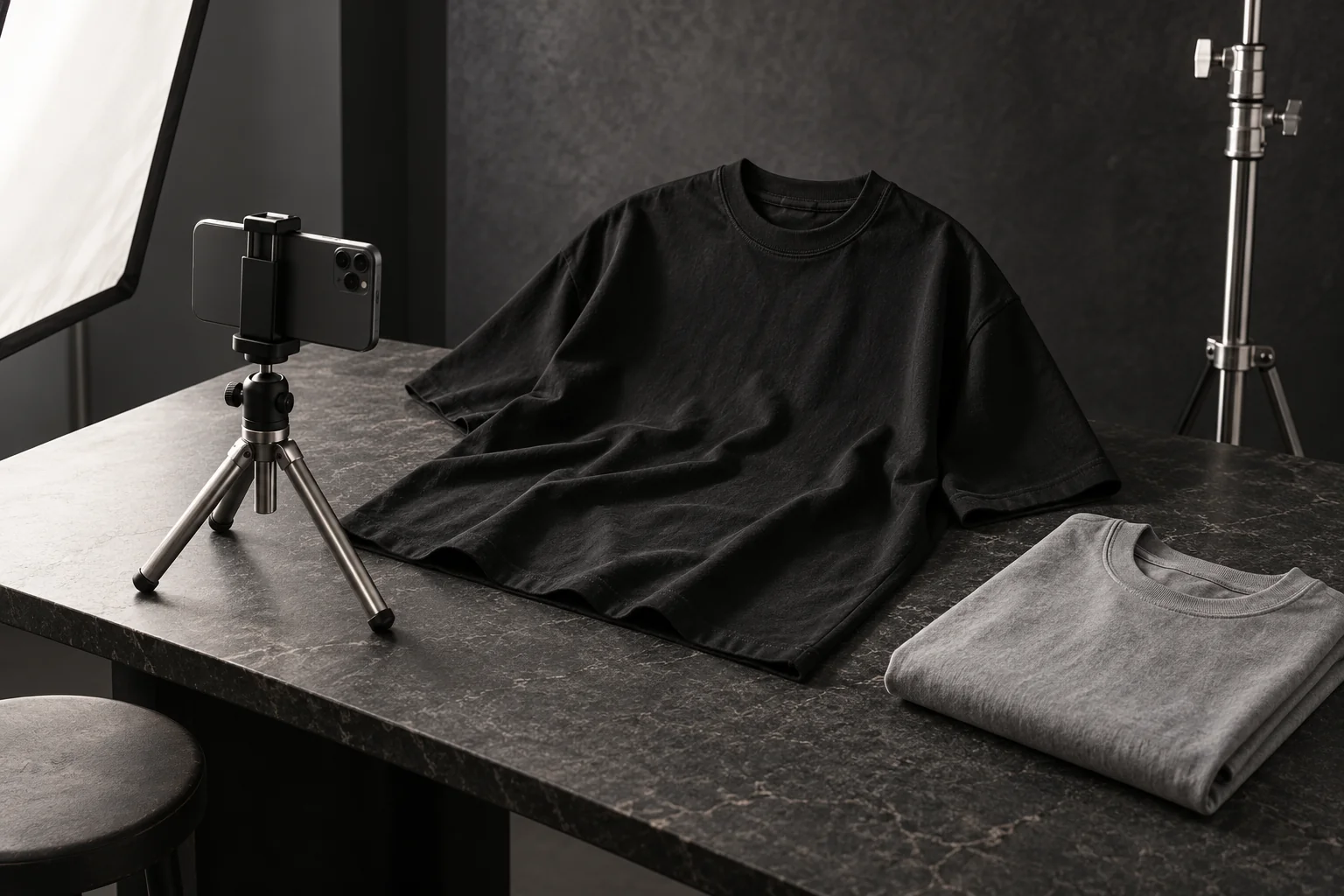
Create a manageable set of photographs and short videos around one approved garment. Capture the overall shape, the artwork in context and any details that help someone evaluate the piece. A short explanation of a design choice can connect those views into a coherent story.
Keep the presentation accurate. Identify a rendered mockup or an AI-created editorial illustration when it could otherwise be mistaken for a real product photograph. For fit, texture and print appearance, use actual product material when you are making claims about the finished item.
Write short image descriptions that explain what is visible and relevant. Give the visitor useful context rather than filling image fields with unrelated search terms. Preserve the original files so you can create consistent crops for the website and your chosen social channel.
Distribute One Useful Story In Several Forms
Turn one original piece of work into a complete article, a brief process video and a small series of images. Each format should make sense where it appears and lead interested people to the page that continues the story.
Choose the community or channel where your audience already discusses the subject. Contribute in a way that respects the group's rules. A thoughtful answer with a relevant example can be more useful than repeatedly sharing a product link without context.
If you offer email updates, explain what people are signing up to receive and use a working subscription process. Keep promotion connected to new designs, useful material or a clear launch update rather than sending the same sales message every time.
Connect Articles With A Natural Next Step
Link to a product when it helps the reader evaluate or act on the topic. Link to another guide when it answers a question that would interrupt the current article. Use link wording that describes the destination.
For example, an audience-research article can lead to our POD niche validation guide. A reader deciding how to handle the product can continue to the POD and dropshipping comparison. These connections support different decisions instead of sending every visitor through the same general introduction.
Use A Four-Week Plan To Organize The Work
| Work Period | Main Output | Useful Evidence To Record |
|---|---|---|
| Week 1 | One audience brief and a review of the product page | Unanswered questions and missing product information |
| Week 2 | One original article and a small product-content shoot | The question answered, the source material and the page's next step |
| Week 3 | Distribution through a relevant channel and community | Which messages led to interested visits or specific questions |
| Week 4 | A review of the published page and available performance data | Useful queries, reader feedback and improvements to make next |
Adjust the pace to what you can maintain. A new site may have little search data during the first review period. Keep the plan focused on producing useful material and learning from real responses, rather than treating the schedule as a traffic forecast.
Measure U.S. Search Visibility Separately From Sales
When you have a verified Search Console property, review search performance for the relevant page and filter the country to United States. Look at the queries appearing for that page and compare consistent date ranges. Google's performance filtering guide explains how country, page and query filters work together.
Impressions, clicks and click-through rate describe different parts of search visibility. Average position summarizes the results observed in the report; it is not a guarantee that every person in every U.S. city sees the same ranking. Use more than one metric when deciding what to improve.
Track the next useful action separately, such as a product view, an inquiry or a completed purchase in your own selling system. A visit is not a sale, and an unpaid request is not collected revenue. Use the measurement tools you have actually configured instead of assuming these actions are tracked automatically.
Turn Product Interest Into A Clear Production Request
When a custom oversized tee fits your collection, MB POD Studio can help you prepare the product and artwork for review. Keep your marketing promise consistent with the product and arrangements you have confirmed.
The current MB website records unpaid order requests. Confirm payment, production and dispatch with Minimal Basics; the studio does not automatically publish your products or handle marketing for your own selling channel.
Organic POD Marketing Questions
How Quickly Will My Clothing Blog Rank On Google?
There is no fixed timeline or guaranteed position. Publish useful original material, make it accessible and review the search and customer evidence that becomes available over time.
Do I Need To Publish Every Day?
Choose a pace that lets you provide a clear answer and original supporting material. Improve useful existing pages when that serves the reader better than another overlapping article.
Should I Judge The Plan Only By Website Visits?
Review relevant traffic and the next customer actions together. A smaller audience with a clear interest in your clothing may be more useful than a large number of unrelated visits.